What Are the Best Peptides for Anxiety Relief ?
Anxiety can quietly affect mental clarity and emotional balance. Researchers are exploring peptides for anxiety as potential tools to understand better and influence stress pathways. These compounds show promising effects in lab studies, helping scientists study anxiety in new ways.
Peptides like Selank, Semax, and Oxytocin attract attention because they interact differently with pathways linked to mood and stress. Early findings suggest these peptides for anxiety may help researchers study calmness, focus and emotional regulation more precisely. Understanding how each peptide works could reveal new directions for research into anxiety-related mechanisms.
As these general findings come together, it becomes important to understand the pathways through which these peptides exert their effects.
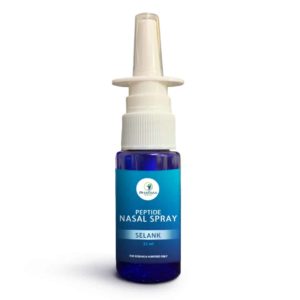
Explore Selank from PharmaGrade Store , a peptide studied for its calming effects on stress pathways and its role in supporting neurological research.
How Peptides Influence Anxiety-Related Brain Pathways?

Researchers study peptides for anxiety because they can affect how the brain responds to stress. Lab studies show that certain compounds influence key circuits that control mood, focus, and emotional reactions. These changes help scientists explore how anxiety develops and how it might be modulated in research.
By observing these effects, researchers can identify patterns that guide future studies. Understanding these pathways provides a clear starting point for examining individual peptides, their unique actions, and their potential roles in anxiety research.
With this foundation in place, it becomes easier to see how specific peptides such as Selank influence these pathways in controlled models.
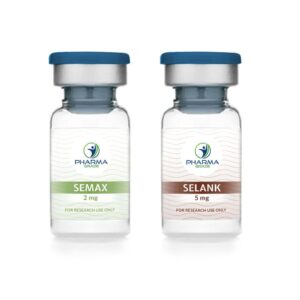
Discover Semax at PharmaGrade Store , a peptide known for its influence on mood-related pathways and its growing interest in cognitive and stress studies.
How Does Selank Affect Anxiety?
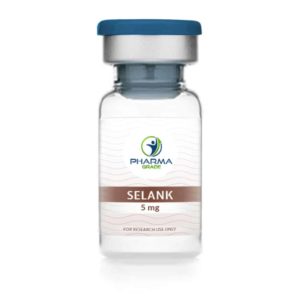
Selank is a synthetic peptide studied as one of the peptides for anxiety in lab and animal research. In rodent studies, Selank reduced anxiety-like behaviors under stress or withdrawal conditions. It affects neurotransmitter systems, especially the GABA_A receptor, which helps regulate brain signals linked to stress.
Research also shows that Selank can alter the expression of genes involved in neurotransmission and emotional responses. These combined effects may act on multiple pathways in the brain and nervous system. While most findings come from preclinical studies, these studies provide scientists with valuable insights into how anxiety peptides work in research models.
As research expands, Semax emerges as another peptide with its own distinct influence on anxiety and mood.
Can Semax Improve Anxiety and Mood?
Semax is studied in lab and animal research for its effects on stress and emotional regulation. Experiments show that it can enhance mental clarity and reduce behaviors linked to anxiety under stressful conditions. Unlike other peptides, Semax appears to support multiple brain systems at once, including dopamine and serotonin pathways, which are important for mood and focus.
Studies also indicate that Semax can influence gene activity related to neural signaling and plasticity. These actions suggest that it helps the brain adapt to stress more efficiently. While evidence comes mainly from preclinical research, it offers valuable insights into how peptides for anxiety may impact emotional balance and cognitive function in controlled studies.
After exploring Semax, Oxytocin offers an additional angle by focusing more on emotional and social responses linked to anxiety.
What Role Does Oxytocin Play in Anxiety and Stress?
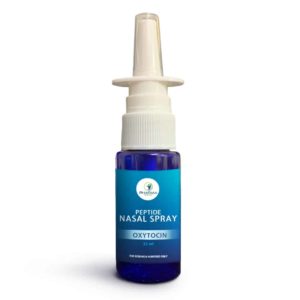
Oxytocin influences how the brain responds to stress and anxiety. Lab and animal studies show it can calm overactive fear circuits and improve emotional stability. Oxytocin also lowers cortisol, the hormone linked to stress, which may reduce anxiety responses in controlled experiments.
Research indicates that oxytocin affects multiple brain pathways involved in mood regulation, including regions associated with social and emotional behavior. These findings highlight how peptides for anxiety, like oxytocin, can provide important insights into managing stress and supporting calmer emotional states in research models.
With the individual roles of Selank, Semax, and Oxytocin outlined, comparing them together gives a clearer picture of how each one contributes to anxiety research.
Check out Oxytocin at PharmaGrade Store , a peptide examined for its role in emotional signaling and its influence on social and stress-related responses in lab settings.
The Most Promising Peptides for Anxiety
Researchers study several compounds in the search for effective peptides for anxiety. Among them, three stand out in preclinical studies. These peptides show different effects on brain chemistry, stress responses, and emotional behavior. A clear comparison shows which compounds generate the strongest findings and how they differ.
| Peptide |
Key Research Effects on Anxiety / Mood |
Mechanisms or Systems Studied |
| Selank |
Reduced anxiety-like behavior in stressed or withdrawal-exposed animals; less disruption under chronic stress |
Modulates GABAA receptor system; alters gene expression for neurotransmission and serotonin/dopamine pathways |
| Semax |
Lowered stress-induced emotional disturbances in rodent models; supported focus and adaptive behavior under stress |
Influences serotonin and dopamine systems; increases BDNF; supports neural plasticity |
| Oxytocin |
Reduced fear responses and lowered amygdala reactivity under social or threat stimuli |
Acts on social-emotional brain circuits; modulates stress hormone response pathways, including cortisol regulation |
This comparison brings the data together, showing how each peptide contributes its own strengths to anxiety research.
The Future of Peptides for Anxiety
Peptides for anxiety continue to show promise in lab and animal studies, revealing new ways to understand stress, mood, and emotional balance. Research on Selank, Semax, and Oxytocin demonstrates how these compounds interact with multiple brain pathways, providing insights into the mechanisms of anxiety.
As science advances, ongoing studies may uncover more peptides, refine their effects, and expand understanding of how anxiety develops and can be influenced in research models. At PharmaGrade, we support these efforts by supplying high-quality research peptides that help scientists explore new directions. This research brings hope for people affected by anxiety and opens doors to future discoveries in mental health.
References:
[1] Kasian A, Kolomin T, Andreeva L, Bondarenko E, et al. Peptide Selank Enhances the Effect of Diazepam in Reducing Anxiety in Unpredictable Chronic Mild Stress Conditions in Rats. Behav Neurol. 2017;2017:5091027.
[2] Inozemtseva LS, Yatsenko KA, Glazova NY, Kamensky AA, et al. Antidepressant-like and antistress effects of the ACTH(4-10) synthetic analogs Semax and Melanotan II on male rats in a model of chronic unpredictable stress. Eur J Pharmacol. 2024 Dec 5;984:177068.
[3] Yoon S, Kim YK. The Role of the Oxytocin System in Anxiety Disorders. Adv Exp Med Biol. 2020;1191:103-120.
[4] Hoge EA, Pollack MH, Kaufman RE, Zak PJ, Simon NM. Oxytocin levels in social anxiety disorder. CNS Neurosci Ther. 2008 Fall;14(3):165-70.
Frequently Asked Questions
Do peptides for anxiety affect stress hormones?
Some peptides for anxiety may influence stress hormones in controlled studies. Certain compounds affect cortisol and other stress-related signals, helping researchers observe how the body responds under pressure. By tracking these hormone changes, scientists can study how different peptides interact with stress pathways and how those shifts relate to anxiety responses in lab models.
Are peptides for anxiety more effective than nootropics?
Peptides for anxiety and nootropics work through different pathways, so one is not universally stronger than the other. Peptides often target specific stress or mood circuits, while nootropics tend to support focus, alertness, or mental performance. Comparing both types helps researchers understand where each group shows clearer effects and how their actions differ across anxiety-related systems.
Do peptides for anxiety influence sleep or stress levels?
Specific peptides for anxiety show changes in stress-linked pathways that can indirectly affect sleep patterns in lab studies. When stress circuits calm down, sleep quality sometimes shifts as a secondary effect. These observations help researchers see how peptide activity in the brain may shape relaxation, recovery cycles, and responses to ongoing stress in controlled environments.
Can peptides for anxiety affect cognitive performance?
Some peptides for anxiety show effects on focus, clarity, and mental processing in lab and animal models. These shifts often occur when stress responses decrease or when attention-related neurotransmitter systems become more balanced. By tracking these changes, scientists gain insight into how peptides might influence working memory, decision-making, and overall cognitive function under stressful conditions.
Do peptides for anxiety influence both mood and focus?
Many peptides for anxiety interact with pathways linked to emotional stability and cognitive control. When these systems become more balanced, mood regulation and focus often show measurable changes in controlled studies. This connection helps researchers examine how calming stress circuits can also support sharper thinking, steady attention, and smoother emotional responses.
ALL PRODUCT INFORMATION AND ARTICLES ON THIS SITE ARE FOR EDUCATIONAL PURPOSES ONLY
DISCLAIMER: All products sold by PharmaGrade.Store are for research and laboratory use only. These products are not designed for use or consumption by humans or animals. They are not to be classified as a drug, food, cosmetic, or medicinal product and must not be mislabelled or used as such. By purchasing from our Website the buyer accepts and acknowledges the risks involved with handling of these products. All articles and product information provided on this Website are for informational and educational purposes only. Handling and use of these products should be restricted to suitably qualified professionals.